


Comparing BILL Alternatives: Features, Pricing, and Downsides
Business owners seeking alternatives to BILL should keep an eye out for platforms that offer AP/AR automation, give consistent cashback on card spend, and support deep control over company finances as a whole. Some of today’s best BILL alternatives are Slash, Tipalti, Stampli, Ramp, Melio, Brex, and QuickBooks Bill Pay. Keep reading to learn about how each of these platforms’ fees and features compare to BILL’s.
Key Takeaways:
- Since BILL lacks features like crypto support, treasury accounts, and global accounts, it ends up being less of a complete financial platform than some alternatives.
- Tipalti is a good pick for global access, since users can send payments globally in multiple different fiat currencies and onboard suppliers with a multi-language vendor portal.
- Stampli aligns itself with procure-to-pay processes more closely than any option on our list.
- Ramp’s “up to 1.5%” cashback can actually be 0% cashback, as rates are decided on a case-by-case basis and aren’t guaranteed.
- As a whole, points-based card rewards have higher earning potential, but categories can be tough to hit and redemption can be complex.
Why Businesses Are Looking For BILL Alternatives
BILL does a solid job with accounts payable automation, but many companies may hit a point where they need more than invoice processing and basic payment capacity. As a team’s financial operations get more complex, BILL's narrower feature set (along with some of its quirks) can start to present limitations. Here are the most common reasons teams may want to explore other options:
Lack of crypto support
BILL has a decent selection of payment rails, including ACH, wires, localized bank transfers, and RTP/FedNow. However, there’s no crypto support, nor are there currently plans in place to bring it to the platform.
When you’re dealing with cross-border payments, crypto rails can be a faster, lower-cost alternative to traditional banking rails. Stablecoin transfers avoid excessive processing and FX fees, and payments settle almost instantly anywhere in the world. Slash allows users to send and receive USD-pegged stablecoins USDC and USDT across 15 supported blockchains for faster, lower-cost global payments.⁴
An underwhelming corporate card
The BILL Divvy card is an unusual mix between a prepaid card, a charge card, and a traditional credit card. Cardholders can choose a billing cycle (weekly, semi-monthly, or monthly), and each schedule offers different reward-earning potential. However, even though the card draws from a line of credit, employees must manually request funds from administrators through the mobile app, similar to how prepaid cards work.
Their rewards structure is also unconventional. BILL's points-based program may seem competitive at first, but its terms can make it unnecessarily difficult to generate meaningful value. Some of the biggest limitations include:
- A 12-month waiting period for new accounts before you can redeem any rewards.
- A monthly 30% credit-line spend requirement to keep the points you earned. Spend any less, and your rewards vanish.
- Slow payouts, with cashback sometimes taking up to 15 business days via ACH or mailed checks.
- Conflicting rules, where the highest point multipliers (up to 7x) require daily or weekly billing cycles. Yet, choosing the shortest billing cycle can make the monthly 30% spend requirement difficult to satisfy, putting cardholders at greater risk of losing the rewards they generated.
Even when you do earn points, the value is low: each point is technically worth around $0.0052, or about half a cent. That low redemption rate can be far less valuable than what you'd get from a card like the Slash Platinum Card, which earns up to 2% on eligible business purchases.¹
Incomplete financial management at a premium price
BILL is ultimately an AP/AR management tool, not a full financial operating system. The system doesn’t have a dedicated treasury account, support digital currency, or offer global accounts that let non-US users access the U.S. dollar. Additionally, if you’re using Oracle NetSuite, you can only sync your books with BILL on their Enterprise tier.
While it does offer a Cash Account that can earn 3% annualized yield on idle cash, that falls short of the Slash Treasury account, which earns up to 4.06% annualized yield with money market investments from BlackRock and Morgan Stanley.⁶ Despite this limited scope, BILL's pricing starts at $49 per user per month and can reach $89 per user, which can add up quickly for growing teams.
What Are the Best Alternatives to BILL?
The trouble with BILL is that their specialized platform is no longer unique in the fintech landscape. Many platforms offer AP/AR capabilities now, along with more competitive rewards and more complete financial management tools. Here are six of the strongest bill.com competitors today with their key benefits and drawbacks:
Slash
While the main focus of Slash’s banking platform isn’t invoicing, its AP/AR capabilities still keep up with BILL’s. It’s a full financial system with invoicing built in, so you can manage billing in the same place as your corporate cards, checking account, and day-to-day finances.
You can use Slash’s intuitive invoice editor to build professional, custom-branded invoices with clear payment terms. From there, they can be sent to clients directly via email with a secure payment link. If you’re sending recurring invoices to the same client, Slash also allows you to choose a repetition schedule and set customized end conditions. From there, you keep track of what’s been sent, viewed, and paid. You also don’t have to follow up on every invoice manually – reminders and recurring billing run on their own.
Outside of accounting and invoicing, Slash is an all-in-one business banking platform that covers a much wider range of capabilities than most of the alternatives on this list. Some additional features that outperform BILL include:
- Payment processing: Let customers pay your invoices by card, add secure checkout components to your existing webpage, track payments from purchase to payout, and manage your incoming revenue from the Slash dashboard.
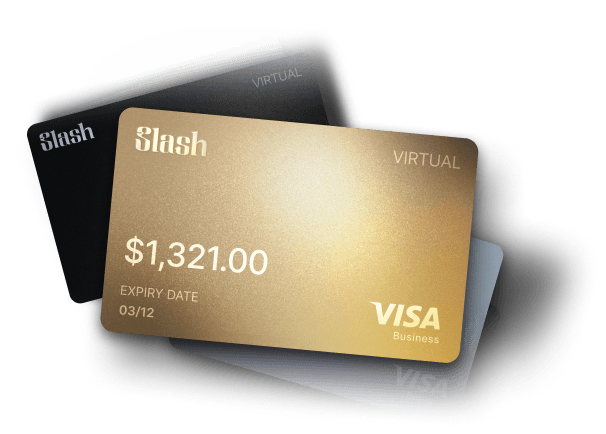
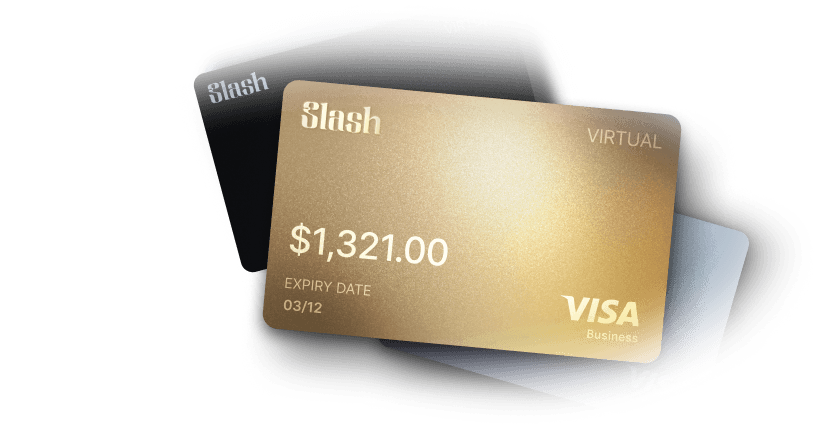
- The Slash Visa® Platinum Card: The Slash Card is a corporate charge card that allows you to set customizable spending controls and issue unlimited virtual cards for handling team expenses, vendor payments, subscriptions, and more. Users can also earn up to 2% cash back on eligible business purchases.
- Native crypto support: Send and receive USD-pegged stablecoins directly in-app. Utilize built-in on/off ramps to seamlessly convert between cash and stablecoins like USDC and USDT.
- Global USD: The Slash Global Account is designed as an alternative for foreign founders who want access to USD without forming a US entity.³ Accounts are backed on Bridge by a balance held in USDC, which is designed to maintain a one-to-one value with the US dollar.
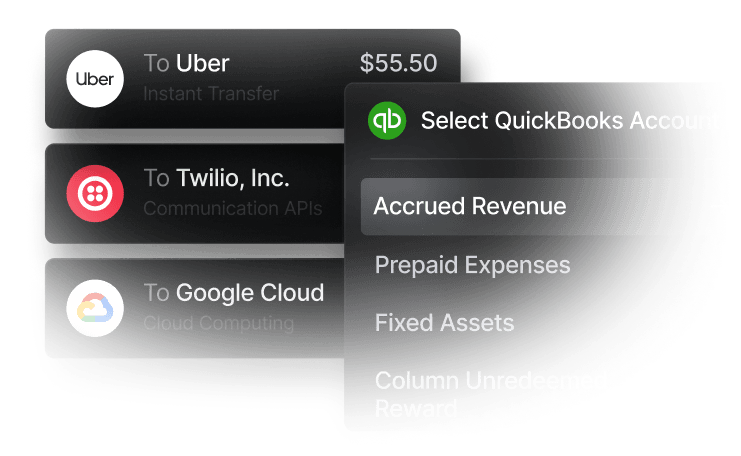
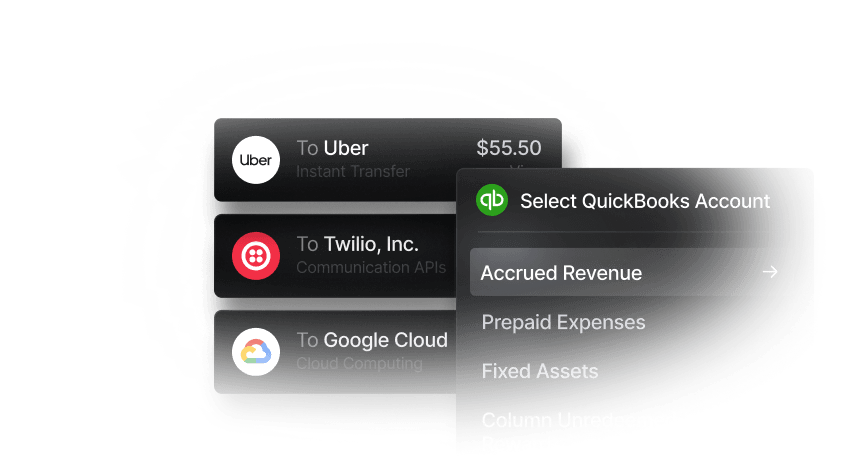
- Accounting & ERP integrations: Sync transaction data with QuickBooks Online, Xero, NetSuite, or Sage Intacct to streamline reconciliation, reporting, and month-end close.
Downsides: Slash currently doesn’t support sole proprietors. Additionally, since the Slash Card is a charge card with a daily repayment schedule, it doesn’t offer as much flexibility as a credit card.
When BILL is the better fit: You may choose BILL if you need to manage employee expenses as well as procurement, as BILL also functions as a procure-to-pay software.
Tipalti
Tipalti, like BILL, is primarily an accounts payable platform rather than a full-stack financial solution. It's built with mid-market and enterprise companies in mind, while BILL tends to be more accessible for small and medium-sized businesses. While Tipalti does excel at AP automation, it shares many of BILL's limitations: high pricing, unclear card terms, and minimal built-in banking functionality.
Some of Tipalti's key features include:
- AP management: Tipalti’s AP capabilities include OCR invoice capture, automated approval routing, and streamlined payment execution powered by Tipalti AI. However, its AR capabilities are far more limited than what you'd find in competitors like BILL and Slash.
- Tipalti Card: The Tipalti Card is positioned as a rewards-earning tool for vendor payments rather than a card built for everyday employee spend control. While it may be useful for larger teams already using Tipalti for AP workflows, the card's rewards terms aren’t actually disclosed, and can vary from customer to customer.
- Multi-currency and global payments: Tipalti can send payments globally in multiple different fiat currencies, and streamline supplier onboarding with a multi-language vendor portal. Payments can be sent via ACH, domestic and international wire, but they currently don’t support RTP/FedNow or crypto payments.
Downsides: Tipalti ranges in price from $99-249 per month, reflecting its enterprise-focused market position. Paywalled behind its more expensive tier is one important capability: global payouts. Tipalti also lacks access to real-time rails or crypto support. Additionally, the Tipalti card has opaque terms, with vague cash rebate rewards and limited functionality compared to other cards on this list.
Stampli
Stampli is an AP management and a procure-to-pay platform, which means it supports teams from the moment they source products and services through to paying the final invoice. It also offers AI-powered AP tools and a corporate card that syncs with the platform. However, its non-AP features lag behind what competitors provide.
Stampli's key features include:
- Procure-to-pay: Procurement is the strategic sourcing and acquisition of goods, services, and materials for your business. Thanks to tight integration with AP, teams can get better visibility into their spending requests and control over the process as a whole.
- AP management: Despite that focus on procurement, Stampli's AP automation is comparable to other dedicated AP tools on this list. Its AI-powered invoicing features include OCR data extraction, two- and three-way matching, and automated approval routing that simplifies invoice processing.
- Cards: Stampli offers two types of credit cards: AP Cards, for vendor purchases that originate from approved purchase requests, and Expense Cards, for employee spending. These cards earn a low “up to” 1% cashback, putting it far behind other rewards programs in this guide.
Downsides: If you’re not specifically looking for a procurement platform, Stampli offers decent AP management and expense tools alongside a business card with minimal rewards and limited flexibility. As a result, it may not be the right choice for most teams.
Ramp
Ramp is a spend management platform built around corporate cards, expense management, and accounts payable, now serving roughly 85,000 businesses. Like BILL, it handles the full invoice-to-payment workflow, but it wraps that AP engine inside a broader finance platform that also covers reimbursements, procurement, travel booking, and an investment account. Its core Bill Pay product carries no monthly software fee, making it one of the few direct BILL alternatives you can run without a subscription at all.
The catch is access. Ramp underwrites on cash rather than credit, so you need roughly $25,000 in a business bank account to qualify.
Ramp’s key features include:
- AP automation and AI agents: Ramp Bill Pay captures invoice data through OCR, then hands coding, fraud checks, approval summaries, and card payment execution to four separate AI agents. It also supports two- and three-way PO matching, recurring bills, amortization for NetSuite users, and an exportable AP aging report.
- Transaction-based pricing: Instead of charging per user for AP, Ramp charges per payment. Standard ACH runs $0.59, a standard check is $1.99, same-day ACH is $10, a domestic wire is $15, and an international SWIFT transfer is $20. Most of those fees are waived if you pay from a Ramp Checking Account.
- 1099 and vendor management: You can request W-9s in bulk, map bill pay spend to 1099-NEC and 1099-MISC boxes automatically, and file with the IRS and eligible states without leaving the platform. Vendors also don’t need to create a Ramp account to get paid.
Downsides: Ramp advertises “up to 1.5%” cashback, but the rate is actually variable and set per business, with the number undisclosed until after you apply and get set up. That makes the headline rate difficult to plan around compared with a published rate. Ramp also doesn’t support RTP/FedNow, and certain ERP integrations sit behind Ramp Plus at $15 per user per month plus a platform fee that scales with team size.
Melio
Melio is a bill payment and invoicing tool whose strength is its accessibility. Its interface is simple to navigate, setup is quick, and the platform focuses on helping teams move money and manage vendor relationships with minimal friction. While they offer a free plan, it’s limited to one user in total and only 5 free ACH payments. Further tiers can cost up to $80/mo (plus $10 per additional user) with extra features like accounting syncs, 1099 automation, and an AI assistant.
Features of Melio include:
- Contractor onboarding: A standout feature is the ability to collect contractor W-9s and sync 1099 data directly to your accounting platform. This can make year-end tax prep significantly easier for businesses that rely heavily on contractors.
- QuickBooks and Xero integrations: Like Slash and most other financial systems, Melio plugs directly into QuickBooks and Xero, ensuring bills, payments, and invoice data stay synced without manual entry. However, you don’t get these connections on their Free tier.
- "Instant" transfers: Melio offers an accelerated ACH option marketed as "instant," but it's not a true real-time payment rail. Transfers still rely on sped-up ACH, charge a 1% fee ($75 max), and are only available in certain circumstances.
Downsides: Melio lacks broader business banking and treasury capabilities, access to RTP/FedNow, and native crypto support. In addition, Melio structures its pricing around access to features and caps how many bank transfers you can execute per month. To get the most from Melio, users may want to upgrade to the unlimited plan, which is $80/month.
Brex
Brex is a broader financial management and banking platform rather than a dedicated AP or procurement tool. Like Slash, it brings together virtual accounts, rewards-earning corporate cards, invoicing tools, and treasury features.. However, Brex is significantly less accessible for certain business types compared with competitors, and it has some notable drawbacks in both rewards value and payment capabilities.
Brex's features include:
- Brex Card: Brex offers a corporate charge card with points-based rewards, but the effective cash value of those points often falls short of what you'd earn with a simple flat-rate cashback card. Rideshare, travel, and restaurants can earn pretty impressive points multipliers, but if your team doesn’t travel much, you may end up earning only 1x points on most purchases.
- Invoicing and accounting: Brex provides invoicing tools and integrations with accounting systems like QuickBooks and Xero. Like Slash, Brex pairs these tools with native business accounts and multiple banking rails, offering more flexibility than platforms that rely on limited or third-party payment infrastructure.
- Travel and expense management: One of Brex's standout features is its built-in travel booking experience, which ties directly into the Brex rewards program. Teams can book flights, hotels, and transportation in-app while maintaining compliance and earning boosted rewards.
Downsides: Brex doesn’t support RTP/FedNow, and it doesn’t quite have crypto rails in the way some other platforms do. They announced support for USDC payments in September 2025, but as of November 2026, it isn’t available for all users. Access to the platform as a whole is another important limitation; startups need at least $50,000 in a business bank account to sign up for Brex, and larger companies have similarly restrictive requirements. There’s no point in weighing Brex against the competition if your pockets aren’t deep enough to sign on in the first place.
QuickBooks Bill Pay
QuickBooks Bill Pay is Intuit’s accounts payable layer built directly into QuickBooks Online. Rather than a standalone platform, it turns the accounting software into a bill payment system. Bills get created from emailed or uploaded invoices, route through approvals, pay out by ACH or check, and reconcile against the ledger without a sync step.
That tight coupling is both the whole proposition and the whole limitation. If you already run QuickBooks Online, Bill Pay Basic costs nothing beyond your existing subscription and standard ACH payments are free. If you don’t, you have to buy into QuickBooks in order to get it.
QuickBooks Bill Pay’s key features include:
- Tiered pricing inside QuickBooks: Bill Pay Basic is included with any QuickBooks Online subscription, which starts at $38 a month. Premium runs $15 a month and adds unlimited 1099 e-filing, while Elite is $45 a month and adds roles and permissions, payment release approval, and custom bill approval workflows.
- Free standard ACH: Standard ACH bill payments carry no transaction fee on any tier. Other methods are priced individually, with checks at $1.50 each, faster ACH at $10, and instant payments at 1% of the transaction amount up to a $100 cap.
- AI bill creation and native reconciliation: Vendors can email invoices to a dedicated bills inbox, where AI extracts dates, terms, categories, and line items into a prefilled bill for review. Because payments run inside QuickBooks, they match and reconcile against your books automatically.
Downsides: Free standard ACH is slow, taking three to five business days, while checks run eight to ten. Bill Pay itself is AP only, so it doesn’t cover the receivables half that BILL handles, though QuickBooks Online does invoicing separately. There’s no corporate card program, no international payment support, and no crypto rails. User counts are also capped by your QuickBooks Online plan rather than sold separately.
What Factors Should I Consider When Choosing a BILL Alternative?
Every platform on this list includes (or will soon include) OCR technology for invoice scanning and processing, which are core functions for AP and AR management. So, when you're evaluating BILL alternatives, it's best to look past the shared basics and focus on the details that actually shape day-to-day operations: how each platform reduces manual data entry, automates workflows, and integrates with your existing systems. Here are some important criteria to keep in mind:
Pricing and cost structure
Pricing is often the biggest surprise with AP/AR tools. Because many of these platforms compete with enterprise software, their subscription models can feel misaligned with the value they provide. BILL's per-user fees can add up quickly, Tipalti runs between $99 and $199 per month, and Melio's full functionality costs around $80 per month.
Slash, on the other hand, provides just about all its features without the need to sign on to a paid subscription plan. On the $25/mo Pro Plan, you can unlock unlimited free domestic transfers and up to 2% cash back on eligible purchases.
Accounting software and ERP integrations
Any AP solution that handles payments should sync seamlessly with leading accounting systems like QuickBooks and Xero. ERP integrations such as NetSuite or Sage Intacct can add even more flexibility for larger companies. Most platforms meet these standards, though there are exceptions; for instance, Spendesk has limited QuickBooks connectivity (U.S. customers only) and requires a manual request to activate the integration.
Available payment methods
Access to traditional banking rails is essential. Services like Spendesk, which rely on Wise's P2P infrastructure, or Stampli, which outsources its payment capabilities, can be much more limited than a unified AP and payments software. Real-time payments are still rare; Melio offers a faster ACH option, while Slash gives you dedicated real-time rails available 24/7, 365 days a year.
Along with your basic SWIFT and ACH payments, Slash also supports RTP/FedNow, global ACH, native crypto transfers for near-instant, low-fee international payments. This means you can pay directly from your Slash business account in just about any scenario without shuffling funds between accounts or platforms.
Scalability and ease of use
Some platforms are approachable for small teams but quickly hit their ceiling. For example, as soon as you start sending ACH payments at a high rate, you’ll probably need to invest in Melio’s most expensive tier. The ideal solution offers an intuitive experience that grows with you, giving you multi-entity support, virtual accounts, configurable card controls, and a modern interface without unnecessary bloat. Slash fits this middle ground well.
Corporate card features and rewards
With high potential multipliers, points-based rewards programs look attractive on the surface, but their tricky redemption requirements and category-specific bonuses can make it tough to actually earn that value. Even with optimized spending, many points-based systems like BILL's and Brex's can end up with a lower effective cash value than a flat-rate cashback card. Slash delivers the best cashback of the bunch, earning up to 2% on eligible card purchases. Plus, that 2% is more straightforward than competitors like BILL, as you don’t need to mind credit utilization thresholds to keep the rewards you earn.
Start Optimizing Your Business Banking Today With Slash
Some tools improve AP workflows, but lack certain payment rails. Others offer procurement features but sacrifice ease of use. Many introduce rigid rewards programs, costly pricing models, or limited international capabilities. Slash doesn't force you to choose between these trade-offs.
With Slash, your team gets a complete business banking experience: high-cashback corporate charge cards, virtual accounts for separating cash flows, high-yield treasury accounts that earn up to 4.06% annualized yield, powerful employee spend controls, and more.
Slash’s invoicing and AP/AR features are just as strong as the ones offered by competitors that focus more closely on them. When vendor bills arrive, you can either forward them to a dedicated inbox so they upload to your dashboard as digital bills automatically, or upload them yourself and get a pre-filled payment log. From there you can schedule automated payment execution, so nobody on your team is responsible for remembering to meet payment terms. When a bill comes due, send the payment via same-day ACH, wires to 180+ countries, RTP, FedNow, or stablecoin.
Here are a few other features and tools you get with Slash:
- Working capital financing: Access short-term financing with flexible 30-, 60-, or 90-day repayment terms to help bridge cash flow gaps.⁵
- MCP connections for agents: The Model Context Protocol is an open standard for connecting AI agents to software tools. Through MCP, agents can connect to Slash directly.
- Enterprise-grade protection: Business accounts are protected up to $150M through Column N.A.'s insured cash sweep network.² Approvals and controls are granular down to the individual card, and AI-assisted monitoring flags spend that falls outside your policy.
- Multi-entity support: Slash offers multi-entity account management tools without separate logins, allowing businesses to track spending, manage accounts, and download statements across all subsidiaries in one place.
- The Action Center: A one-stop spot for employees to see pending tasks assigned to them. These may include card requests, expense submissions, reimbursement reviews, and more.
Don't get stuck with an AP tool pretending to be an all-in-one solution. Slash gives you a true banking-first platform that outpaces dedicated AP software.
Apply in less than 10 minutes today
Join the 10,000+ businesses already using Slash.
Frequently Asked Questions
Does BILL come with a corporate credit card?
In a way, yes. While you can use the BILL Divvy Card as a charge card, you can also use it to draw from a line of credit. However, employees must manually request funds from administrators through the mobile app, similar to how prepaid cards work.
The Best Business Credit Cards of 2026

Does BILL support accounts receivable as well as accounts payable?
Yes, and that’s one of its strengths. With the exception of Slash, most of the alternatives on our list come with a more limited AR feature set than their AP feature set. BILL and Slash do a solid job of balancing both.
Accounts Receivable Automation: A Guide for Businesses

How do transaction processing times compare across BILL and its alternatives?
Processing speeds can vary widely across alternatives. Some platforms rely solely on checks, ACH, and wire transfers, which may introduce delays during processing. Others, like Melio, offer accelerated ACH. All in all, few match Slash's support for real-time rails or native stablecoin transfers.
How scalable are these platforms as my business grows?
Scalability depends on how much a platform can support increasing transaction volume, more complex approval workflows, multi-entity structures, and diverse payment needs. Tools built purely for AP tend to cap out quickly, while enterprise suites can become overly complex or expensive for mid-market teams. Slash, however, is designed to scale with your operations no matter your business's growth stage.
Read more from us


