


Is SWIFT a Banking System? Managing Your Businesses International Payments
If your business routinely sends money across borders, you’ve almost certainly used the SWIFT network to do it. SWIFT facilitates international payments by routing specific instructions and data between financial institutions, ensuring money makes it safely from sender to recipient. However, SWIFT itself isn’t a banking system. It doesn’t hold your money, nor does it move your funds from one account to another. Instead, it provides the standardized communication layer that makes reliable international banking possible.
While the SWIFT network is one of the primary methods of sending money internationally, it’s not the only method. Some business owners tend to prioritize other global payment rails with different settlement times and fee structures. Before determining which method works best for your business, it’s important to understand the ins-and-outs of SWIFT.
In this article, we’ll cover how the SWIFT system actually works, who uses it, its limitations, and other global payment rails companies can utilize. We’ll also take a look at Slash, a business banking platform that not only allows users to send SWIFT payments to 180+ countries, but also offers access to stablecoin transfers and global ACH.¹, ⁴
The standard in finance
Slash goes above with better controls, better rewards, and better support for your business.


What Does SWIFT Stand For?
SWIFT is an acronym that stands for the Society for Worldwide Interbank Financial Telecommunication. It was founded in Brussels in 1973 by a consortium of banks looking to replace Telex, the existing system for international financial transactions. While Telex was impressive at the time, it lacked the standardization and scalability necessary to catch up to accelerating global trade. SWIFT solved these problems by creating a secure, standardized messaging protocol that banks could use to communicate payment instructions reliably.
Today, more than 11,000 financial institutions across over 200 countries use SWIFT to exchange information. The network processes more than 53 million messages per day and over 11 billion messages annually, per SWIFT's own measurements.
As we mentioned before, the SWIFT network doesn’t actually handle and send funds. Instead, SWIFT uses a common code-based language that allows interbank communication. When a bank in New York needs to instruct a bank in Tokyo to credit an account, both institutions “speak SWIFT”. This standardization is what makes international payments work reliably across thousands of different banks, each with their own internal systems and processes.
One more note: you may see the terms “international wire transfer” and “SWIFT transfer” used interchangeably. While they’re closely related, they’re not technically the same thing. A wire transfer is a broad term referring to any electronic transfer of funds, while a SWIFT transfer refers to a movement of funds that’s been facilitated by the SWIFT network.
How Does SWIFT Work?
When you initiate a SWIFT payment, your bank doesn't directly send money to the recipient's bank. Instead, your bank sends a message through the SWIFT network containing instructions about the financial transaction. Here's how a SWIFT payment works in three steps:
Step 1: Initiating the Payment
Heads up, the first step is on you – you’ve got to provide your bank with all the details required to send an international wire. This typically includes the recipient's name & address, their international bank account number (IBAN), their bank's SWIFT code (also called a Bank Identifier Code or BIC), and the amount you want to send. You can initiate this payment over the phone, through your bank's online portal, or in person at a branch.
The SWIFT code is a unique identifier between 8 and 11 characters that specifies exactly which financial institution should receive the payment instructions. As an example, a SWIFT code for a U.S. Bank in Milwaukee might look like this:
USBKUS33MIL
The first four characters [USBK] identify the bank, the next two [US] identify the country, the following two or three [33] identify the location or city, and the final three characters [MIL] can identify a specific branch or main office.
Step 2: Your Bank Sends a Message
Once you've provided the payment details, your bank converts this information into a standardized SWIFT message format and transmits it through the SWIFT network. This message contains all the information the receiving bank needs to complete the payment, including who should receive the funds, the total amount, what currency is being used, and which account to credit.
If your bank and the receiving bank have a direct relationship, the message goes straight through. If they don't have this relationship, the message routes through one or more intermediary banks that do. Each bank in the chain reads the SWIFT message, processes its part of the instruction, and passes it along.
Step 3: The Receiving Bank Takes It From There
When the final bank in the chain receives the SWIFT message, it credits the recipient's account from its own reserves. The actual movement of funds between banks happens through separate settlement processes, often involving “nostro” and “vostro” accounts, which are correspondent accounts that facilitate cross-border transactions. From there, the recipient gets their funds in their home currency, and both parties receive confirmations through messages or reference numbers.
The number of steps between initiation and settlement can lead to a long wait. While the message itself transmits quickly, each bank involved needs to process the instruction, verify compliance with anti-money laundering regulations, move funds between intermediary banks, and execute the settlement. Depending on how many banks are in the chain and what time zones they operate in, the complete process can take up to five business days.
Slash business banking
Works with cards, crypto, plus cards, crypto, accounting, and more.
Who Uses the SWIFT Network?
While SWIFT was originally built for transactions between large financial institutions, its use has expanded significantly over time. Today, the network supports a broad range of participants that use SWIFT in different ways:
- Banks of all kinds use the SWIFT network to communicate with each other and settle funds
- Fintechs can connect to the network to offer international transfer services
- Brokers and exchanges may use SWIFT for instructions and confirmations, sometimes relying on central counterparty clearing houses (CCPs) for settlement
- Corporations can utilize the network for treasury operations or standard transfers
- Government treasuries often send official international transactions through SWIFT
If you’re a small business owner that’s made purchases or transfers across borders, you're likely already a SWIFT user yourself. It's not a separate layer; you interact with the system through your bank or payment platform rather than directly. Individuals can also use the SWIFT system outside of a business context, but services like Western Union and PayPal tend to be preferred due to their faster speeds and lower costs.
What Else Can You Do With SWIFT?
The SWIFT network supports much more than B2B payments. It’s the backbone for several critical functions in international banking, including:
Enabling Communication Between Banks
As SWIFT is a communication network, banks can use the system to speak to one another about different processes. The network handles messages related to foreign exchange confirmations, account statements, trade documentation, and requests for information about account balances or transaction status. This allows banks to coordinate complex financial activities across borders without needing to save the contact information of thousands of other institutions.
Supporting Trade Finance and International Business Operations
If you’re sending an international payment, there’s a good chance you’re looking to receive a product or service in exchange. It’s simple business. Documentary credits, also known as letters of credit, are financial instruments used in international trade to guarantee payment to exporters and to protect both parties in a contract of sale. The SWIFT system handles the issuance, confirmation, and settlement of these credits.
While some cross-border payments simply bring funds from point A to point B, most involve a trade of goods or services that requires the inclusion of extra terms. SWIFT provides the infrastructure that makes these types of complex trades possible.
Screening for Compliance and Fraud
International banking comes with quite a few compliance obligations, including anti-money laundering (AML) and Know Your Customer (KYC) regulations. As a cooperative run by financial institutions, SWIFT actually offers a suite of products that help with fraud prevention, known as their Compliance Analytics. Banks can use these tools to check transactions against watchlists, identify suspicious patterns, and ensure they're not inadvertently facilitating illegal activity. SWIFT also maintains a KYC registry that holds customer-related data and documentation.
The standard in finance
Slash goes above with better controls, better rewards, and better support for your business.


The Limitations of SWIFT Payments
While the SWIFT network is reliable and widely trusted, there are tradeoffs that business owners should understand before relying on it to send international payments. Some of these limitations include:
Someone Always Pays the Fees
SWIFT charges banks a fee to use its services, and banks pass that fee onto their customers. This fee typically ranges between $25-50, but the amount of the fee and the individuals in charge of paying it vary based on regions and banking relationships. Banks offer three fee structures with codes: “OUR” means the sender pays all fees, “SHA” means both the sender and recipient share the costs, and “BEN” means the beneficiary pays.
Some banks and financial institutions let the sender choose the code, while others default to SHA or OUR. After initiation, intermediary banks in the chain may deduct further charges from the transferred amount. The unpredictable nature of all these costs can create cash flow uncertainty for both senders and recipients.
It's Not Always Fast
SWIFT transfers aren’t usually too “swift”. The combination of intermediary banks, time zones, and unexpected delays can result in week-long transfer times. Since the SWIFT system doesn’t operate on weekends or holidays, these transactions can be further pushed back by federal holidays in either party’s country.
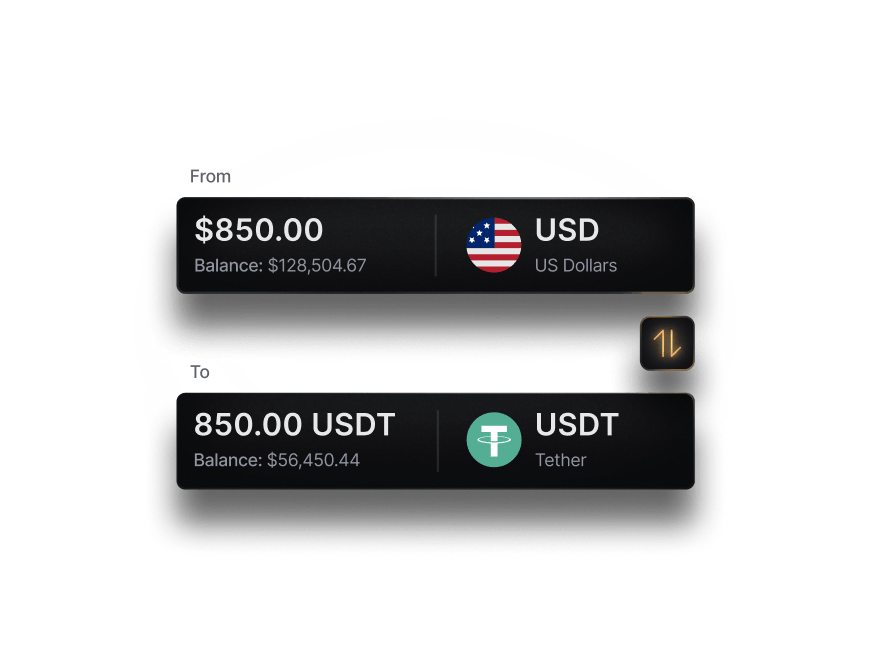
Simpler transfers can be fairly quick; sending major currencies like USD or EUR between correspondent banks with direct relationships may complete in one to two days. Transfers in less common currencies, or between banks that require multiple intermediaries, sometimes take five or more days. For urgent transfers that need to be completed within a day or during a weekend, businesses may consider a blockchain-based payment method like crypto. Slash comes with built-in stablecoin on/off ramps, meaning users can send, receive, and withdraw virtual currencies in minutes.
The Amount That Arrives May Not Match What You Sent
Correspondent fees aren’t the only way a transaction amount can change along its journey. When the sender’s currency is different from the recipient’s currency, there must be a conversion along the way. This conversion introduces foreign exchange (FX) risk. Due to fluctuating exchange rates, the value the beneficiary receives may be less than the value initially sent.
For example, a transfer to Beijing might be initiated from the United States on a Wednesday when 1 Chinese Yuan (R$) equals $0.16 USD. If the payment takes several days to settle and the exchange rate moves to $0.18 by Saturday, the final converted amount will differ from what was expected at the time of initiation. This fluctuation can lead to unpredictable costs or shortfalls, especially for larger payments. This is another limitation that the use of stablecoins can bypass, as currency conversion isn’t part of the crypto payment process.
Tracking is Limited
Your financial institution will provide a unique reference number when you initiate a SWIFT payment. However, that number doesn’t provide tracking that’s detailed enough to cover a typical transaction’s steps. When your transfer can pass through multiple intermediary banks and compliance checkpoints, you may want to know how far along the journey your funds are. However, this generally isn’t possible; all you know is whether the payment is pending or if it’s arrived. Finance departments looking to visualize their cash flow or close their books may be frustrated by important payments that get stuck in limbo.
How Slash Can Streamline International Payments
The SWIFT network isn’t the only rail that businesses can use to send and receive payments across borders. Global ACH is a payment method that usually comes with lower fees, and crypto is a type of virtual currency that can be exchanged in less than a minute. Each payment rail has its ideal use cases. For this reason, businesses should utilize a banking platform that gives them the flexibility to choose between all of them. This is where Slash can help.
Slash is a business banking platform that supports:
- SWIFT transfers
- ACH transfers (standard, same-day, and global)
- Domestic real-time payments (FedNow and RTP)
- Domestic wire transfers
- Stablecoin transactions (USDC, USDT)
- Corporate card payments
Our platform allows businesses to select the payment rail of their choice based on transaction characteristics rather than system limitations. You won’t be stuck with one option, and you won’t have to juggle fractured financial platforms to accommodate multiple. No matter the method you choose, all payment statuses and settlements are tracked in real time on the Slash dashboard, resulting in an organized cash flow, clear audit trails, and easy reconciliation.
Slash also integrates two-ways with QuickBooks Online, Xero, and Sage Intacct. This allows your accounting software of choice to automatically pull payment information from our platform and sync it with the rest of your accounts payable (AP) or accounts receivable (AR) data.
Other Slash features include:
- Slash Visa® Platinum Card: The Slash Card is a charge card that allows users to set customized spending controls and issue unlimited virtual cards for handling team expenses, vendor payments, subscriptions, and more. You can also earn up to 2% cash back on eligible purchases.
- AI-powered finance: Our platform comes with Twin, a built-in AI agent that can be prompted with natural language to complete complex tasks. Users can ask it to create cards, pay invoices, review your cash flow, and much more.
- Working capital financing: Slash users can access short-term financing with flexible 30-, 60-, or 90-day repayment terms to help bridge cash flow gaps.⁵
- High-yield treasury: Earn up to 3.82% annualized yield on idle funds with money market investments from BlackRock and Morgan Stanley, managed directly within your Slash account.⁶
If you need to send money overseas and you don’t want to be tied down to one payment option, give Slash a try.
Apply in less than 10 minutes today
Join the 10,000+ businesses already using Slash.
Frequently Asked Questionss
How do I find my bank's BIC/SWIFT code?
You can usually find your bank’s BIC/SWIFT code on official documents like bank statements, or within your online or mobile banking app, often under account details or wire transfer instructions. Many banks also list their SWIFT codes on their website, especially on pages related to international transfers. If you’re unsure, you can contact your bank directly to confirm the correct code, since using the wrong one can delay or misroute a payment.
What is an IBAN Number, and How Do You Find It?

SWIFT Cross-Border Payments: How They Work and Key Uses

What’s the maximum amount of a single SWIFT payment?
While there's no strict network-imposed limit on the amount you can send through SWIFT, individual financial institutions and providers may set their own per-transaction caps, often around $10,000 and sometimes up to $1M or more.
International Business Payments: Methods, Fees, and Best Options
Is there a difference between SWIFT messages and BIC/SWIFT codes?
SWIFT messages and BIC/SWIFT codes are two very different things. SWIFT messages are the secure, standardized, and electronic instructional data packets sent between intermediary banks to initiate financial transactions. BIC/SWIFT codes are the 8-11 digit identifiers for specific financial institutions, and do not help interbank telecommunication.
Is the SWIFT network the only international payment system?
No. You may also use Fedwire, Ripple, or the Clearing House Interbank Payments System (CHIPS). However, SWIFT is the network with the largest international financial reach.
Best Ways to Pay Overseas Suppliers: Comparing Different Methods and Navigating Fees


