

What is the best business bank for a healthcare practice?
Quick answer: For a practice with several locations or separate legal entities, Slash is a strong fit: each entity gets its own plan under one login, virtual accounts keep each location's money separate, and Bill Pay with approval rules handles suppliers and labs. A single-location practice that deposits cash or checks at a branch most days may be better served by a traditional bank such as Chase. Mercury suits practices that want free domestic payments, Ramp and Brex suit practices focused on expense automation, and BILL suits offices that mainly need bill pay.
It depends on how your practice is set up and how money comes in. A solo dental office taking daily paper checks needs something different from a med spa group with four locations and a management company. This guide compares six options on fees, multi-location setup, supplier payments, staff cards, accounting sync, and deposit coverage.

What should a healthcare practice look for in a business bank account?
- Separate entities and locations. Many practices run each clinic, a management company, or a real estate holding company as its own entity. Look for one login that covers all of them, plus a way to keep each location's money separate.
- Supplier and lab payments with approvals. Supply distributors, dental labs, and equipment vendors get paid by ACH or wire. Approval rules stop one person from sending a large payment alone.
- Staff cards with limits. Office managers and front-desk staff buy supplies. Cards with spending limits are easier to control than a shared card.
- Accounting sync. Your bookkeeper or CPA needs clean data in QuickBooks, Xero, NetSuite, or Sage Intacct, often split by location.
- Deposit coverage. Practices that hold payroll reserves or sale proceeds can exceed standard FDIC limits. Extended coverage through sweep networks varies widely by provider.
- Cash and check handling. If patients pay in cash or by paper check, how you deposit those funds matters as much as any feature list.
How do Slash, Mercury, Ramp, Brex, BILL, and Chase compare?
Competitor details checked November 11, 2026, on each provider's own site.
Chase lists five ways to waive its $15 fee. Slash, Mercury, Brex, and Ramp extend FDIC coverage by spreading deposits across partner banks, and BILL does the same through its Cash Account.
Which account is best for each type of practice?
- Best for practices with several locations or entities: Slash. Unlimited entities on one login, each on its own flat plan, with virtual accounts per location and accounting sync on every plan.
- Best for practices that deposit cash and checks in person: Chase. Business Complete Banking includes $5,000 of in-branch cash deposits per statement cycle at no additional charge, and deposits at a Chase ATM carry no additional charge.
- Best for practices focused on expense automation: Ramp or Brex. Both pair cards and bill pay with a business account and free same-day ACH. Ramp requires $25,000 in a business bank account to qualify and charges $15 per user on Plus. Brex charges $12 per user on Premium, and commercial businesses need more than $500,000 in annual revenue for monthly payments.
- Best for free domestic and USD international payments: Mercury. $0 ACH, domestic wires, real-time payments, and USD international wires on all plans.
- Best for offices that mainly need bill pay: BILL. Approval workflows on every plan, plus invoicing with recurring invoices and reminders, from $49 per user per month. Multi-entity support starts on Corporate at $89 per user.
Why does Slash fit practices with several locations or entities?
One login for every entity
Slash charges a flat fee per entity: $0 on Free or $25 a month on Pro, with no per-user fees. You can add unlimited entities to one login, and each entity sits on its own plan. A group can keep each clinic and its management company separate without juggling logins.
Virtual accounts for each location
Virtual accounts give each location its own account number inside the same entity. Deposits can go to a specific location's account number, so you can see each site's cash without a spreadsheet.
Supplier and lab payments with approvals
Slash Bill Pay sends ACH and wire payments with approval rules. Multi-step approvals let you require a second sign-off on large orders. On Pro, same-day ACH and domestic wires are $0. On Free, they cost $1 and $6. If you use NetSuite, Bill Pay bills and payments sync back to it.
Staff cards with limits and up to 2% cash back
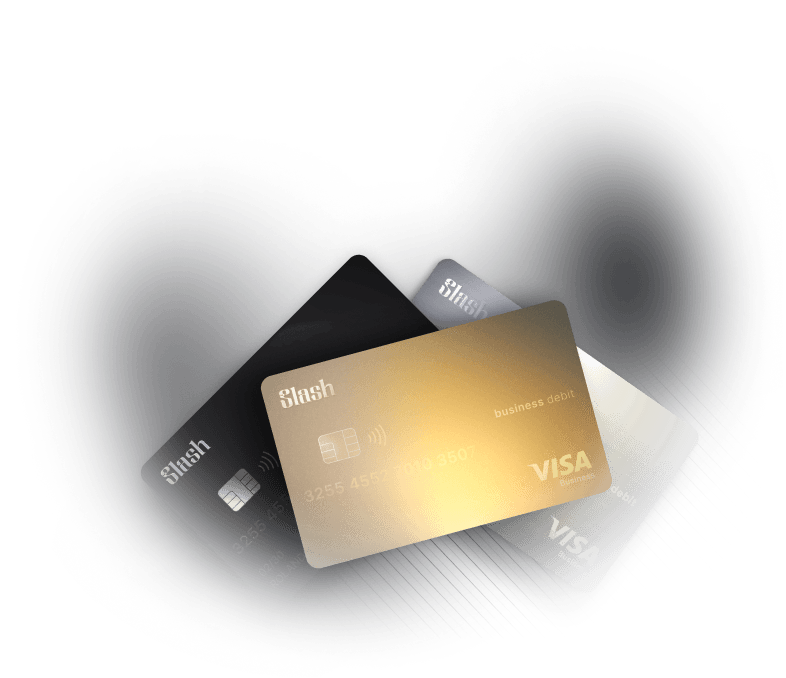
The Slash Visa Platinum Card earns up to 2% cash back, with no cashback cap. You can issue unlimited virtual cards plus physical cards, group them, and set per-transaction and merchant category limits. The standard card is a charge card that settles daily from your Slash checking account, so there is no interest and no carried balance.
Accounting sync on every plan
QuickBooks Online, Xero, NetSuite, and Sage Intacct connect on both Free and Pro. NetSuite and Sage Intacct imports include locations, departments, classes, and subsidiaries. You review each transaction, tag it to the right clinic, mark it Ready to Sync, and then sync.
FDIC coverage for larger balances
Slash's banking partner is Column N.A., Member FDIC. FDIC insurance is available up to $200M through Column N.A. and the IntraFi sweep network. Slash Treasury has no minimum balance.
Working Capital for equipment and payroll timing
Slash Working Capital offers 30-, 60-, or 90-day terms with no hard credit pull. A practice can use it to cover an equipment purchase or a payroll that comes due before insurer payments arrive.
What is the best business bank account for a medical practice?
For a single-location medical practice that is mostly paid electronically, any of these five can work, so compare fees and how you pay suppliers. Once you add a second location, an ambulatory surgery center, or a separate management company, multi-entity support and per-location accounts become the deciding factors. That is where Slash is strongest.
What is the best business bank account for a dental practice?
Dental practices pay labs and supply distributors every month, often by ACH. Bill pay with approval rules keeps those payments controlled when an office manager prepares them and a dentist approves them. Slash, Mercury, Ramp, Brex, and BILL all offer bill pay with approvals. For dental groups with several offices or entities, Slash adds unlimited entities on one login and virtual accounts per office, with no per-user fees.
What is the best business bank account for a med spa?
Med spas buy product and supplies often, and several staff members may make purchases. Cards with per-transaction and merchant category limits help, as does cash back. Slash's card earns up to 2% cash back. Mercury's IO card earns 1.5%. Brex pays points worth 0.6 cents each as cash, and Ramp doesn't publish its cashback rate.
What are the trade-offs?
- Daily cash and checks. If your front desk collects cash or paper checks and someone takes them to a branch every day, a branch bank like Chase is simpler. Slash, Mercury, Ramp, Brex, and BILL are built around electronic payments, so confirm how deposits would work before you switch.
- Patient payment processing. Card terminals, online patient payments, and payment plans usually run through a processor connected to your practice management software. Choose that separately and point its deposits to the account you pick.
- Entity type. Slash accepts US-registered LLCs, C-Corps, and S-Corps. Sole proprietorships are not eligible. Chase lets sole proprietorships open Business Complete Banking online.
- Payment fees on free plans. Slash Free charges $1 for same-day ACH and $6 for domestic wires, and Pro removes both. Mercury charges $0 for those on every plan, and Ramp and Brex offer free same-day ACH. BILL charges $0.59 per ACH payment and $11.99 for faster ACH.
- Per-user pricing and balance conditions. Ramp Plus, Brex Premium, and BILL's AP and AR plans charge per user, so cost grows with your office staff. Ramp requires $25,000 in a business bank account to qualify, Mercury Treasury requires a $250,000 Mercury balance, and the BILL Cash Account requires a BILL subscription.
To see how entities, location accounts, and supplier payments work together, visit Slash for healthcare or Slash for medical spas. For head-to-head details, see Slash vs Mercury, Slash vs Ramp, Slash vs Brex, and Slash vs BILL, or how Slash connects corporate cards to NetSuite and Sage Intacct.
Frequently Asked Questions
What is the best business bank account for a medical practice with multiple locations?
Look for one login across entities and separate account numbers per location. Slash supports unlimited entities on one login, each on its own plan ($0 on Free or $25 a month on Pro per entity), plus virtual accounts per location. BILL's multi-entity support starts on its Corporate plan at $89 per user, and Brex Essentials covers up to two entities.
Should my practice use a traditional bank or an online business bank?
If you deposit cash or paper checks in person most days, a bank with branches is usually easier. Chase Business Complete Banking includes $5,000 of in-branch cash deposits per statement cycle at no additional charge. If you are mostly paid electronically and want approvals, staff cards, and accounting sync in one place, an online platform like Slash, Mercury, Ramp, or Brex may fit better.
Is my practice's money FDIC insured above $250,000?
Standard FDIC coverage is $250,000 per depositor at each insured bank. Slash offers FDIC insurance up to $200M through Column N.A. and the IntraFi sweep network, Brex up to $6M, and Mercury up to $5M. The BILL Cash Account offers up to $200M with a BILL subscription, and Ramp uses IntraFi's network without publishing a limit.
Can a business bank account handle patient payments?
Partly. Slash Invoicing accepts ACH, wire, and card payments, and Chase offers card acceptance through Chase QuickAccept. In-office card payments and patient billing often run through a processor tied to practice management software, so treat that as a separate decision.
Can a solo practitioner open a Slash account?
Yes, if the practice is a US-registered LLC, C-Corp, or S-Corp. Sole proprietorships are not eligible. Slash has no published minimum balance and no venture funding requirement.
Can my practice get financing for equipment or payroll gaps?
Slash Working Capital offers 30-, 60-, or 90-day terms with no hard credit pull, which can bridge an equipment purchase or a payroll that comes due before insurer payments arrive. For longer-term financing, Chase also offers business loans and lines of credit.
Apply in less than 10 minutes today
Join the 10,000+ businesses already using Slash.
Read more from us


